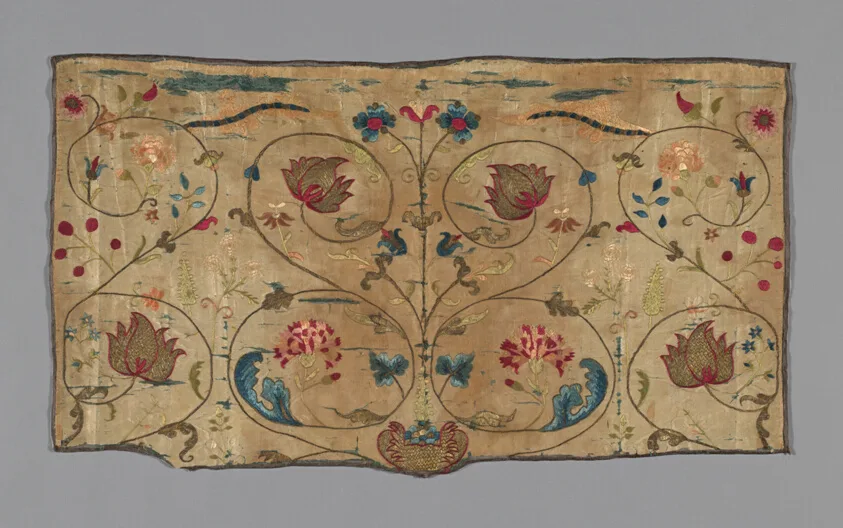
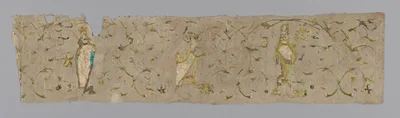
Fragment
France
- Artist
- France
- Date
- 17th century
- Medium
- Front and back of silk, plain weave; stitched and embroidered together with silk floss and gold gilt strip wound silk core in long and short, running, satin and stem stitches (reversible)
- Classification
- textile
- Dimensions
- 3000 × 1880 px
Palette
k-means, k=5, in CIELAB
- #96969732%Find works near #969697, which covers 32% of this work
- #ab906832%Find works near #ab9068, which covers 32% of this work
- #90755224%Find works near #907552, which covers 24% of this work
- #6560547%Find works near #656054, which covers 7% of this work
- #8452414%Find works near #845241, which covers 4% of this work
Each swatch is a cluster centre from the image itself, with the share of the canvas it covers. Select one to find other works near that colour.
Similar in palette
These works are close in colour only. The comparison comes from palette distance, so it knows nothing about subject, composition, or period — a portrait and a landscape can match exactly.
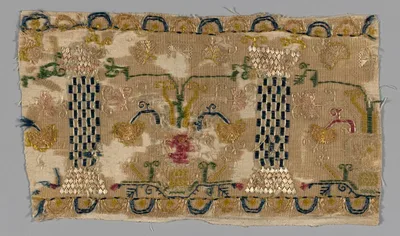
Fragment
Italy
ΔE 4.2 · very close
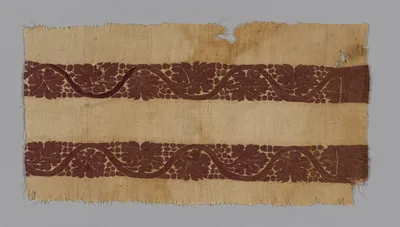
Fragment
Egypt, possibly Akhmin
ΔE 4.4 · very close
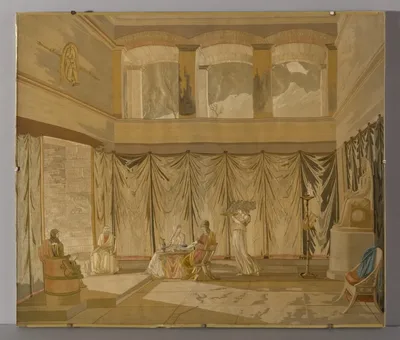
L'Hiver (Winter)
Pierre Antoine Mongin
ΔE 4.4 · very close
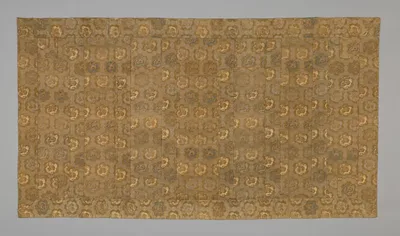
Kesa
Japan
ΔE 4.8 · very close
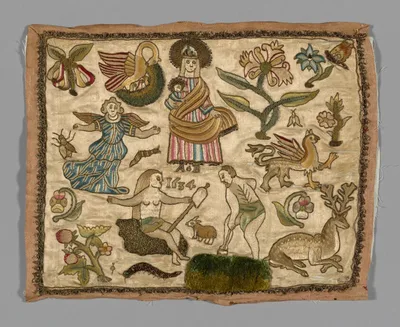
Picture
England
ΔE 5.1 · close
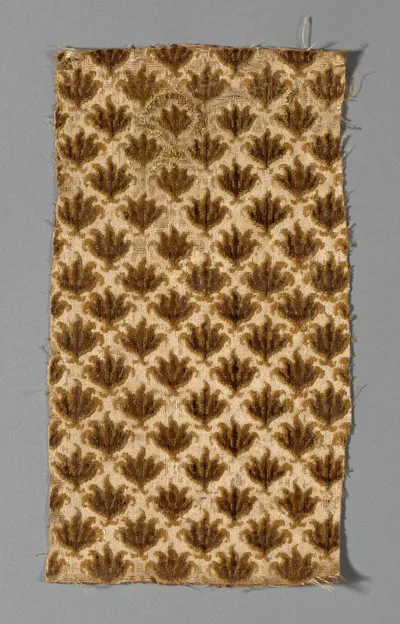
Fragment (Dress Fabric)
Possibly Italy
ΔE 5.3 · close
Border of a Valance
Spain
ΔE 5.5 · close
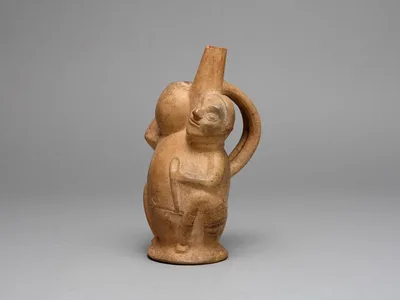
Handle Spout Vessel in the Form of a Seated Man Carrying a Jar
Lambayeque
ΔE 5.6 · close
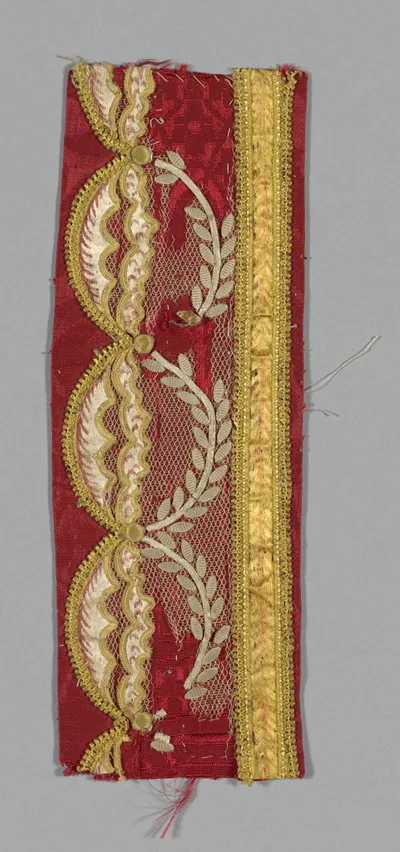
Border
France
ΔE 5.8 · close
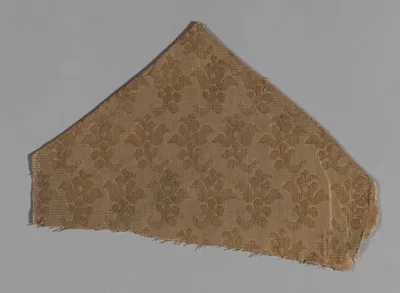
Fragment
France
ΔE 5.9 · close
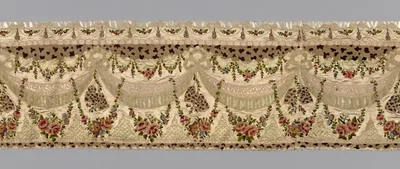
Valance
France
ΔE 5.9 · close
Border
Germany
ΔE 6.0 · close